Emergency Medical Technology PHCLink

PHCLink

Personal Health Card Link

NFC-powered wearable medical profiles — available as a bracelet, card, or magnet — giving first responders instant access to critical patient information when every second counts.

Instant Access. Better Outcomes.

Visit PHCLink.com Contact Us
The Challenge

When Patients Can't Speak, Responders Need Answers

Every year, first responders arrive on scene to patients who are unconscious, in cardiac arrest, experiencing a severe medical episode, or otherwise unable to communicate. In those critical first minutes, knowledge of the patient's medical history, current medications, known allergies, and emergency contacts can be the difference between effective intervention and preventable adverse outcomes.

Traditional solutions — medical alert bracelets, paper wallet cards, and caregiver-provided histories — are inconsistent, limited in detail, and often not available when seconds count. PHCLink addresses this gap systematically, making comprehensive medical profiles accessible through the same NFC technology already familiar to fire and EMS personnel.

PHCLink bridges the critical information gap between what a patient knows about their own health and what a first responder needs to know at the point of care — instantly, reliably, and without requiring the patient to communicate.
The PHCLink Ecosystem

✍️
PHCLink Writer App Used by the fire department or their designated partner to create and update medical profiles, then write them directly to the citizen's PHCLink NFC card.
📲
PHCLink Reader App (Free) Used by first responders to instantly read a patient's PHCLink card and display their full medical profile at the point of care. Available at no cost.
🪪
PHCLink Devices Available in three form factors — bracelet, card, and magnet — carried or worn by the citizen. All medical profile data is stored directly on the device — no data is held on fire department or SOAR Consulting servers.
🔑
License Key Activation Secure license key model ensures only authorized fire department personnel or designated partners can create and manage PHCLink profiles.
How It Works

Department-Managed. Responder-Ready.

PHCLink profiles are created and maintained by the fire department or their designated partner — ensuring data accuracy and keeping the citizen's medical information current, while giving first responders instant access at the point of care.

1️⃣

Department Creates the Profile

Using the PHCLink Writer app, authorized fire department personnel or a designated partner enter the citizen's medical profile — conditions, medications, allergies, blood type, emergency contacts, and physician information — and write it directly to the citizen's PHCLink NFC card.

2️⃣

Citizen Wears or Carries the Device

PHCLink is available in three form factors — a wristband bracelet, a wallet card, and a refrigerator magnet — so citizens can choose the option that best fits their lifestyle. All data is stored directly on the device itself. No battery, no cellular signal, and no external server required to access the information.

3️⃣

Responder Taps on Scene

On arrival, the first responder opens the free PHCLink Reader app and taps the patient's card. The complete medical profile displays immediately — in seconds, with no login delay and no search required.

PHCLink Devices

Three Form Factors. One Standard of Care.

PHCLink is available in three NFC-enabled form factors, giving fire departments flexibility in how they deploy medical profiles across their community — particularly for citizens with different needs, mobility levels, and daily routines.

PHCLink Bracelet

Bracelet

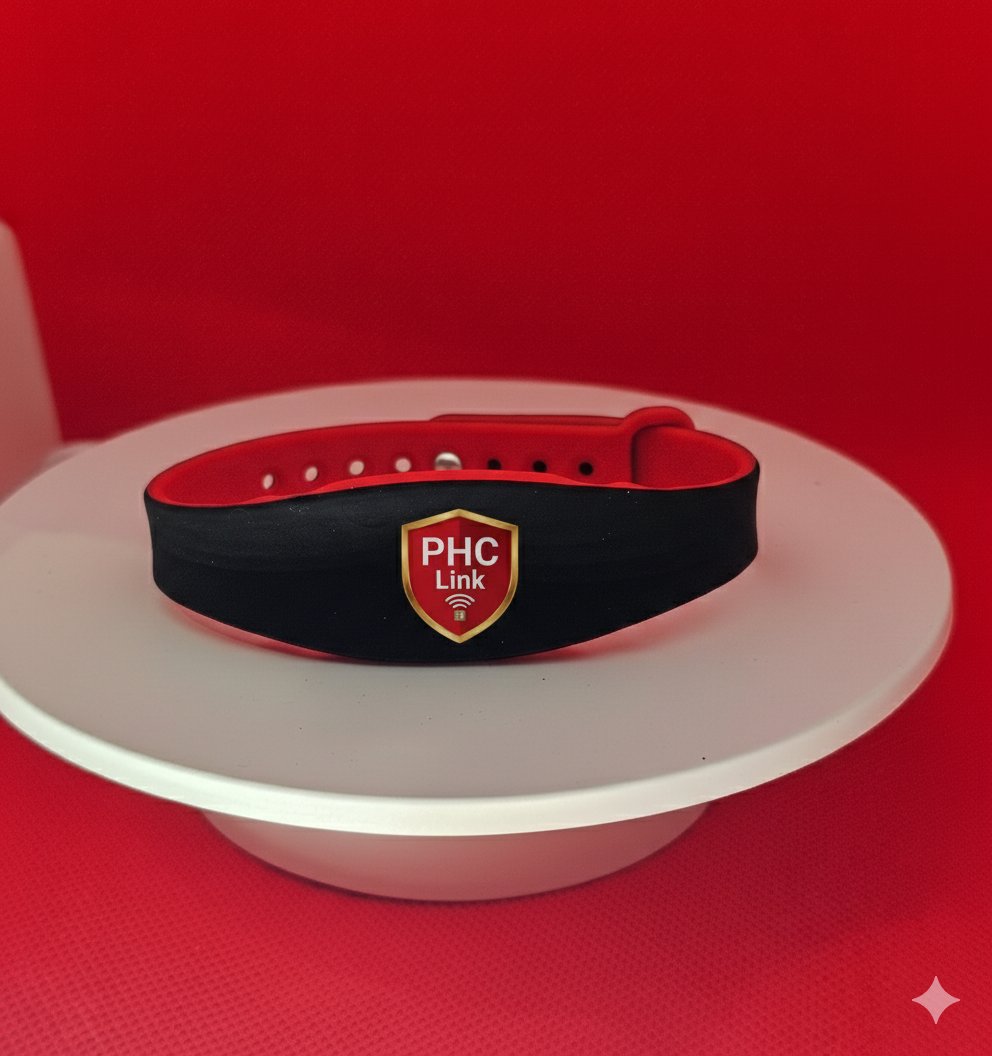
A durable silicone wristband with the PHCLink NFC chip embedded in the face plate. Ideal for citizens who are active, elderly, or at elevated risk of a medical emergency — worn continuously so it is always on the person and accessible to responders.

PHCLink Card

Card

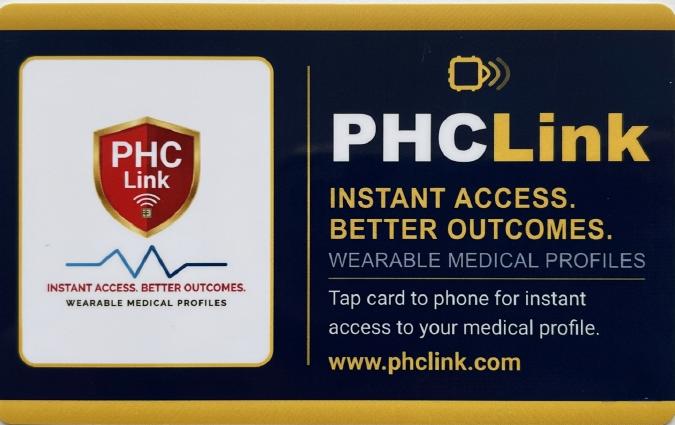
A standard wallet-sized NFC card carried in a purse, wallet, or badge holder. Displays the PHCLink identity and tagline — Instant Access. Better Outcomes. — and is immediately recognizable to any trained first responder.

PHCLink Magnet

Magnet

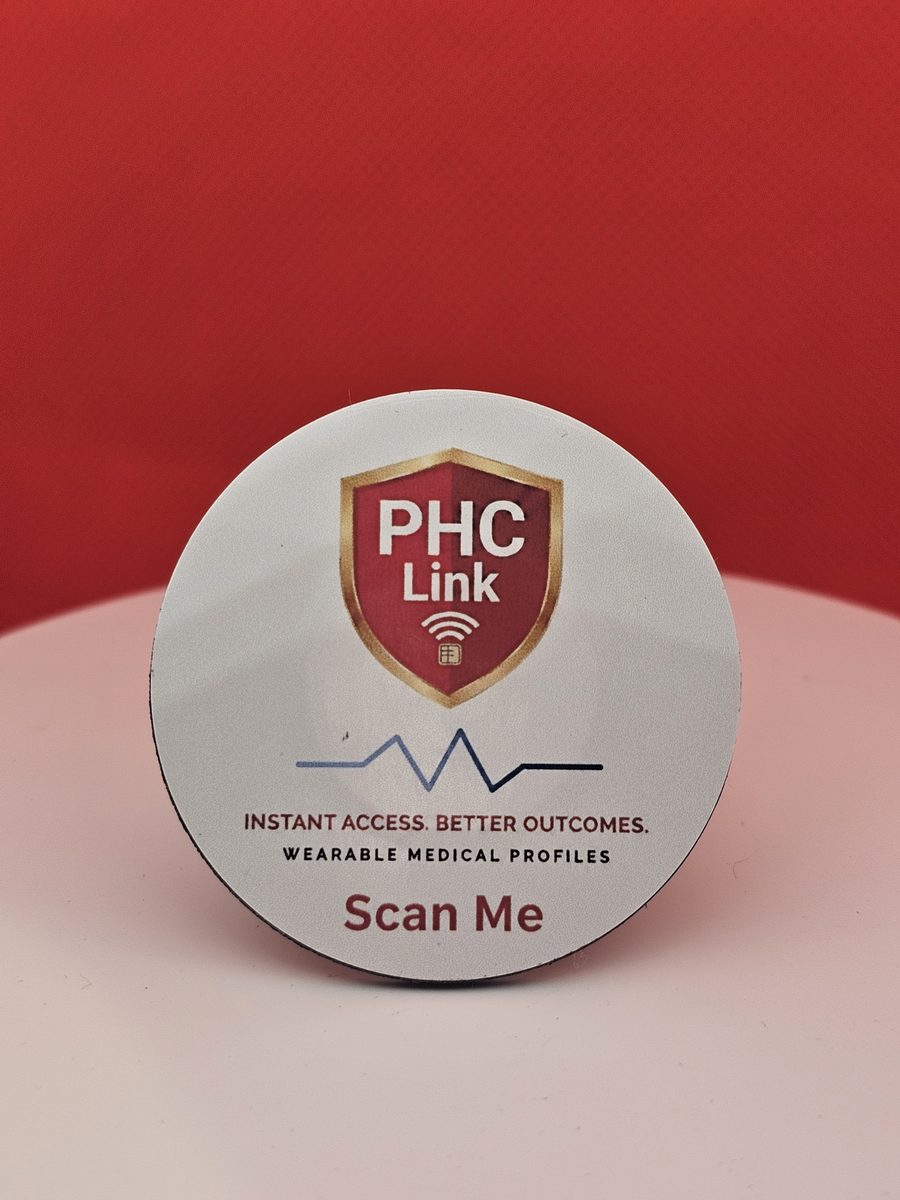
A round NFC-enabled magnet designed for placement on a refrigerator or other prominent surface in the home. Particularly effective for homebound individuals — responders entering a residence can tap the magnet immediately upon entry to access the resident's medical profile.

All three PHCLink form factors use the same NFC technology and store data identically — any device can be read by the free PHCLink Reader app. Departments can deploy one form factor or a combination, based on the needs of the citizens they serve.

Medical Profile Data

What a PHCLink Profile Contains

PHCLink profiles are designed to capture the information most critical to first responder decision-making at the point of patient care.

💊

Current Medications

Complete medication list including dosage and frequency — essential for paramedics and EMTs to avoid contraindications and inform treatment decisions.

⚠️

Allergies & Adverse Reactions

Documented drug, food, and environmental allergies with noted severity — preventing potentially life-threatening administration errors during emergency treatment.

🩺

Medical Conditions

Active diagnoses including cardiac conditions, diabetes, seizure disorders, respiratory conditions, and other chronic or episodic medical issues relevant to emergency response.

🩸

Blood Type & Critical Data

Blood type, DNR status, organ donor designation, implanted devices (pacemakers, defibrillators), and other critical clinical data that informs rapid treatment decisions.

👨‍⚕️

Physician & Care Team

Primary care physician, specialists, and care facility contacts — enabling rapid communication with the patient's established medical team when indicated.

📞

Emergency Contacts

Prioritized emergency contact list — ensuring family members or designated representatives are notified promptly and can provide additional medical context to responders.

Deployment

A Fire Department-Led Community Program

PHCLink is deployed through fire departments and their designated partners — ensuring that medical profiles are created accurately, maintained over time, and immediately accessible to any responder on scene.

🚒

Fire Department Deployment

Fire departments obtain the PHCLink Writer app through a licensed subscription, enabling authorized personnel to create and manage medical profiles for community members — particularly at-risk residents such as elderly individuals, those with chronic conditions, and citizens with access or functional needs.

  • Bracelets, cards, and magnets available for department distribution programs
  • All profile data stored directly on the citizen's PHCLink card — no departmental server storage
  • Free Reader app deployed to all apparatus and response personnel
  • Aligns with CRR program goals and FEMA grant objectives
  • Supports ISO and accreditation community risk reduction documentation
Inquire About Department Deployment
🤝

Designated Partner Deployment

Fire departments may authorize designated community partners — such as home health agencies, senior service organizations, or healthcare partners — to assist in the creation and maintenance of PHCLink profiles on behalf of the department's program.

  • Partner access managed through the department's licensed Writer subscription
  • Extends program reach without additional burden on department personnel
  • Appropriate for large-scale community distribution programs
  • All data remains on the citizen's card — no third-party server exposure
Learn More

Give Your Community a Voice
When They Cannot Speak

Learn how PHCLink can be deployed as part of your department's Community Risk Reduction program. Contact our team or visit phclink.com for more information.

Visit PHCLink.com Contact Our Team